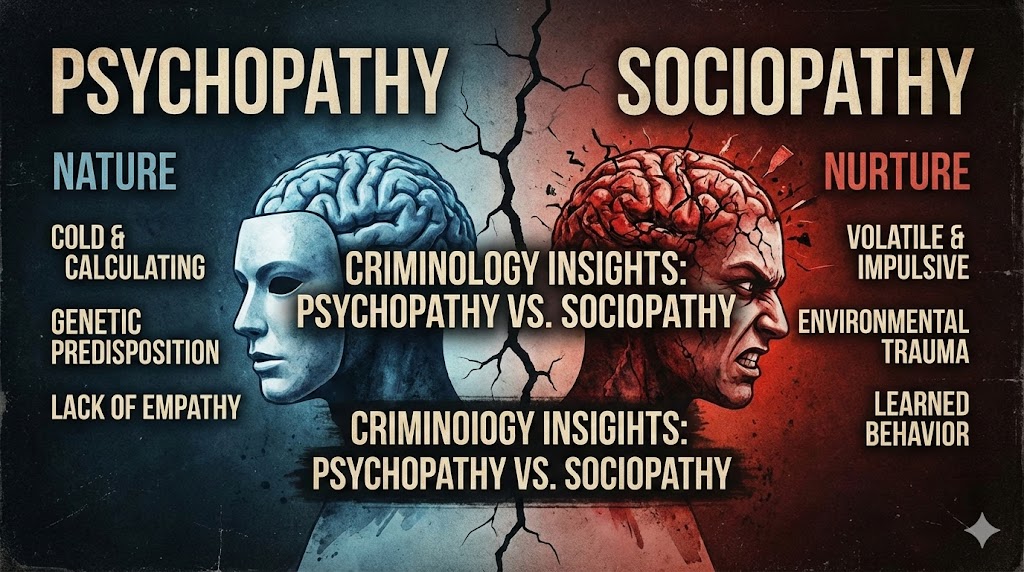
Confusion between these two terms is very common because, clinically, both typically fall under the same diagnostic umbrella in the DSM-5 (Diagnostic and Statistical Manual of Mental Disorders): Antisocial Personality Disorder (ASPD).
However, in the fields of forensic criminology and criminal psychology, the distinction is vital because it helps predict the subject’s dangerousness, recidivism, and modus operandi.
1. The Clinical Basis: What Does Official Science Say?
Before distinguishing between them, it is important to clarify to the reader that neither “psychopath” nor “sociopath” are official medical diagnoses today.
The actual diagnosis: Antisocial Personality Disorder (ASPD).
The difference: Experts consider psychopathy and sociopathy to be subcategories or different manifestations within this spectrum.
You can imagine ASPD as a large “container.” Inside it, there are people with sociopathic traits and others (less common and more dangerous) with psychopathic traits.
2. The Psychopath: “The Cold Predator”
Psychopathy is generally associated with innate or biological factors. It is often said that the psychopath is born, not made (although environment does play a role).
Key Characteristics:
- Brain Physiology: They possess physical differences in the brain. Their amygdala (the part that processes fear and emotions) tends to be smaller or less active. This means that, physiologically, they do not feel fear or anxiety in the same way others do.
- Zero Empathy (Cognitive vs. Emotional): They understand what you are feeling (cognitive empathy) and can use it to manipulate you, but they do not feel your pain (lack of emotional empathy).
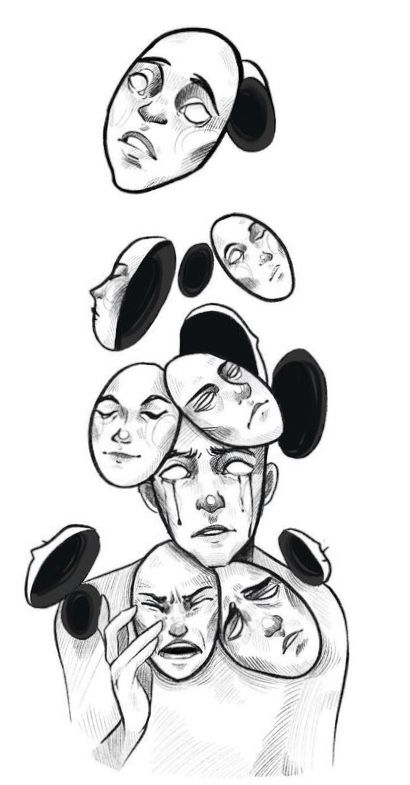
- Superficial Charm: They are often charismatic, articulate, and highly intelligent. They know how to mimic normal human emotions (“The Mask of Sanity”).
- Planners: They are meticulous. In criminology, they are associated with the “Organized Killer” profile. They plan the crime, bring their own tools, leave no traces, and have alibis.
- Anger Management: They rarely lose control impulsively. If they are violent, it is instrumental violence (goal-oriented), not reactive.
Criminological Example: The white-collar conman who ruins thousands of families without losing sleep, or the serial killer who leads a perfect double life (like Ted Bundy or John Wayne Gacy).
3. The Sociopath: “The Erratic Volcano”
Sociopathy is more closely associated with environmental factors/upbringing. It is often said that the sociopath is made (childhood trauma, physical abuse, extreme neglect).
Key Characteristics:
- Traumatic Origin: Their behavior is a response to a belief system damaged by an abusive upbringing or a hostile environment.
- Capacity for Bonding: Unlike the psychopath, the sociopath can form deep bonds with specific individuals (such as a mother, a child, or a fellow gang member), even if they do not respect general social norms.
- Impulsivity and Agitación: They are volatile, prone to fits of rage and nervousness. They struggle to hold down jobs or maintain stable lives.
- Lack of a “Mask”: It is much harder for them to hide their true nature. They are perceived as “odd” or “disturbed” by society.
- Criminology: They are associated with the “Disorganized Killer” profile. Their crimes tend to be spontaneous, sloppy, passion-driven, or reactive. They leave a lot of evidence (DNA, fingerprints) because they do not plan.
Criminological Example: The violent offender who kills in a bar fight, or the gang member who is loyal to his group but brutal to outsiders
4. Comparative table
| Characteristic | Psychopath | Sociopath |
| Origin | Predominantly genetic/biological (Nature). | Predominantly environmental/trauma (Nurture). |
| Emotional Stability | Controlled, cold, calculating. | Erratic, prone to rage, anxious. |
| Empathy | Non-existent. They mimic emotions. | Limited. Capable of feeling guilt or selective loyalty. |
| Social Life | Often successful, charming, integrated. | Marginalized, unstable, difficulty adapting. |
| Criminal Behavior | Organized: Planned, minimizes risks. | Disorganized: Impulsive, sloppy, opportunistic. |
| Response to Punishment | Do not learn from punishment (low anxiety). | May fear punishment, but impulsivity prevails. |
5. Why Are They Confused?
The confusion stems from the shared symptoms of Antisocial Personality Disorder (ASPD):
- Disregard for Rules: Both break laws and social norms without apparent remorse.
- Violation of Rights: Both violate the rights of others to get what they want.
- Deceit and Manipulation: Although the psychopath is more skilled at this, both lie compulsively.
- Lack of Responsibility: Neither takes accountability for their actions; it is always the victim’s or the system’s fault.

6. The Crime Scene: Comparative Forensic Analysis
In criminal profiling, the distinction between psychopathy and sociopathy aligns almost perfectly with the dichotomy established by the FBI’s Behavioral Science Unit: Organized Offender (Psychopath) vs. Disorganized Offender (Sociopath).
This classification not only describes the perpetrator’s psychology but also predicts what investigators will physically find at the scene.
A. The Psychopath: The “Organized” Crime Scene
The scene reflects a logical, calculating, and controlled mind. The crime is a project, not an accident.
Planning and Premeditation:
- “Kill Kit” / Tools: The offender brings the necessary tools with them (rope, duct tape, weapons, cleaning supplies). This indicates the crime was mentally rehearsed.
- Victim Selection: The victim is usually a stranger chosen for fitting a specific profile (physical, age, occupation). The psychopath has stalked, watched, and studied their routines (“Hunting”).
- The Location: There are often three separate scenes: the approach/abduction site, the kill site, and the body disposal site. This requires a vehicle and logistical control.
During the Crime (Control):
- Use of Restraints: Ligature marks or handcuffs are commonly found. The goal is immobilization to exert total power.
- Conversation: The psychopath often interacts verbally with the victim to manipulate, terrorize, or gratify themselves (verbal sadism).
- Controlled Violence: Wounds tend to be methodical. Torture, if present, occurs ante-mortem (before death) to satisfy a fantasy.
Post-Crime (Forensic Awareness):
- Cleanup: The subject attempts to remove traces (use of bleach, picking up shell casings, use of condoms).
- Staging: They may alter the body’s position to mislead police (e.g., simulating a sexual burglary when the motive was personal, or posing the body in a degrading manner).
- The Body: The body is often concealed or transported to a remote area to buy time before the investigation begins.
- The Weapon: Almost never found at the scene; the killer takes it with them.
B. The Sociopath: The “Disorganized” Crime Scene
The scene reflects chaos, rage, and a lack of planning. The crime is an emotional explosion or a poorly managed opportunity.
Spontaneity and Opportunity:
- Weapons of Opportunity: The offender uses whatever is found at the scene (a kitchen knife from the house, a rock, a lamp). They brought nothing with them.
- Victim Selection: The victim is usually known (neighbor, ex-partner, friend) or simply someone in the wrong place at the wrong time (“blitz attack”).
- The Location: Everything happens in a single location. The approach, the murder, and the abandonment occur within the same radius.
During the Crime (Fury):
- Overkill (Excessive Violence): A key characteristic. If one stab wound is fatal, the sociopath might inflict fifty. It reflects an altered emotional state (rage, panic, revenge).
- Attack on the Face: They often disfigure the victim’s face to “erase” their identity (depersonalization), indicating they likely knew the victim and feel a mix of rage and guilt.
- Absence of Restraints: They rarely bind the victim; they use brute force and surprise to subdue them.
Post-Crime (Panic):
- Rapid Fleeing: No attempts to clean up. They leave fingerprints, footprints, hair, and bodily fluids.
- The Body: The body is left exactly where it fell, in plain sight. There is no attempt to hide it.
- The Weapon: Often abandoned next to the body due to the panic of fleeing quickly.
Final Conclusion
The distinction between psychopathy and sociopathy transcends academic semantics; it is a vital tool for the understanding of deviant behavior and public safety.
Although both profiles share the clinical diagnosis of Antisocial Personality Disorder, characterized by a disregard for rules and a lack of respect for the rights of others, their internal mechanisms are opposites.
- The Psychopath operates from a neurological deficit in emotional processing, which turns them into a camouflaged predator, patient and highly resistant to rehabilitation, capable of simulating normality while planning calculated harm. They represent cold evil and systemic manipulation.
- Conversely, the Sociopath is the result of failed socialization and a traumatic environment. Their dangerousness lies not in planning, but in their volatility, their inability to manage impulses, and their explosive reaction to frustration. They represent “hot” violence and social chaos.
For the criminologist, identifying whether they are facing a mind that cannot feel (psychopath) or one that feels too much and in the wrong way (sociopath) is the first step not only to solve a crime, but to predict the offender’s next move.



Leave a Reply